
A local campaign launches, the first report lands on Friday, and by Monday the calendar is empty. The research, the audience questions and the seasonal angle you paid to develop stop working the moment the media budget does.
Use this guide to turn one local campaign into six months of useful content. It shows marketing leaders how to plan an editorial programme from campaign research, guides, FAQs and seasonal material before the launch date arrives.
Covered in this article
Why a local campaign goes quiet the week after launch
FAQs
Why a local campaign goes quiet the week after launch
The launch goes well. Ads are live, the landing page is getting traffic, and the first report lands on Friday. Then Monday arrives and there is nothing in the diary.
This is the pattern in most regional campaigns. Teams plan around three things: a launch date, a budget and a reporting window. Nobody plans for what comes next. Activity drops off, the audience you just reached hears nothing, and the research you paid for sits in a folder.
A planning gap, not an ideas gap
Your team is not short of ideas. The problem is that no one decided, before launch, where the campaign material would go next. The local research, the questions your sales team hears, the seasonal angle: all of it could keep working. Without a plan, it doesn't.
The cost shows up every quarter. You start the next campaign from a blank page and pay again to reach people you already had. Our piece on building a pipeline engine instead of buying campaigns explains why one-off bursts are costly to repeat.

The Next Step for Your Local Content Strategy
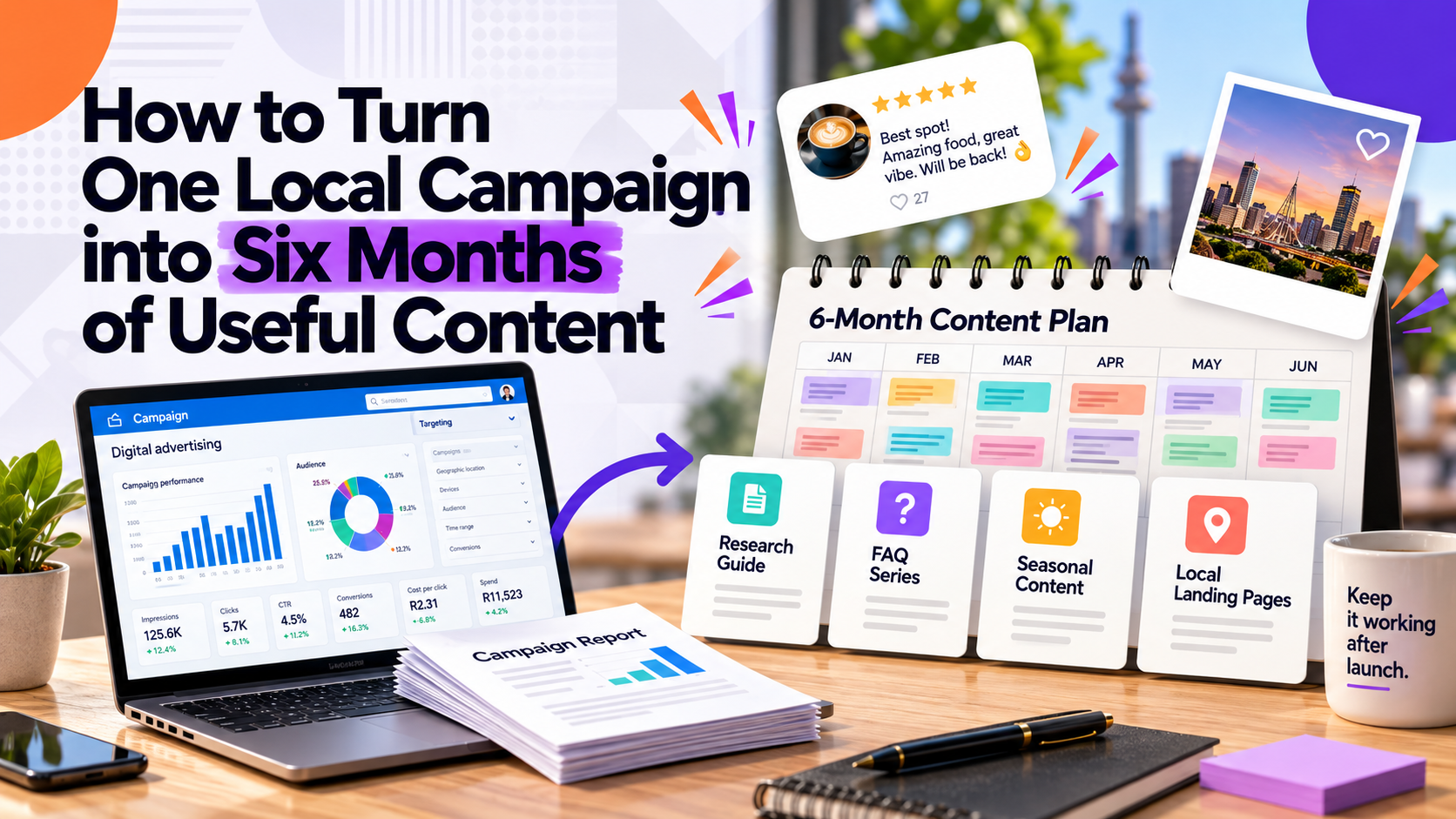
Before your next local launch, list what the campaign will produce beyond the campaign itself: the research, a guide, the FAQs your sales team hears, and the seasonal angle. Give each one a slot in a six-month calendar and a named owner. That single decision is what separates a burst of activity from an editorial programme.
If you want help building that plan into your HubSpot setup, Velocity Digital, a Platinum HubSpot Solutions Partner, works with marketing teams to connect campaign planning, content and reporting so regional work keeps earning after launch.
FAQs
1. How do you repurpose a local campaign into more content?
Start with the assets the campaign already created: local research, audience questions, creative and seasonal timing. Turn the research into a guide, the questions into an FAQ page or article series, and the seasonal angle into content scheduled for the next relevant window. Assign each piece a publish date before the campaign launches, so reuse is part of the plan rather than an afterthought.
2. How long should a local marketing campaign run?
It depends on your buying cycle, budget and objective, so there is no single right answer. What matters more is what happens when paid activity ends. Treat the campaign as the opening phase of a longer programme, with content already scheduled to keep the audience engaged once the media stops.
3. How do you keep local campaign content relevant after the campaign ends?
Separate the material that expires from the material that doesn't. Offers and launch messaging date quickly, while research, guides and answers to common questions stay useful for longer. Review the evergreen pieces on a regular schedule, update local details, and tie seasonal content to a calendar so it returns at the right time.
4. What content formats work best for local digital marketing?
Choose formats by the job they need to do. Guides and FAQ pages answer the questions buyers ask before they enquire. Short articles and email follow-ups keep your audience warm between campaigns, and local landing pages give search engines something specific to index. Start with the formats your team can maintain consistently, then add more once the rhythm holds.
5. How do you measure the long-term return on a local campaign?
Track the campaign and the content that follows it in the same system, using consistent UTM parameters and your CRM so activity connects to pipeline and revenue. Compare results across the full six months, not just the launch window. Our article on attribution models and RevOps explains how to avoid crediting the wrong channels.